
If Your House Keeps Making Cracking Sounds, Here's When to Worry
Most pops are harmless. Two of them aren't — here's how to tell them apart.
You're half asleep when the house lets out a sharp crack, like someone stepped on a branch in the hallway. Nobody's there. It happens again the next cold night, and now you're lying awake wondering whether the place is quietly coming apart around you. It's one of the most common late-night homeowner worries — and the good news is that the noise itself almost never means trouble.
Almost certainly nothing is wrong. The vast majority of pops, cracks, and creaks are just your house changing temperature and humidity. Materials expand in the day's heat and contract as things cool, and framing, decking, and ductwork snap as they move against each other. It's loudest at night in fall and winter because that's when the temperature swing is biggest — and it's completely harmless.
Why a house makes noise
A house is built from dozens of different materials — wood framing, plywood decking, metal ducts, nails and screws, drywall — and they all expand and contract at different rates as the temperature and humidity change through the day and across the seasons. When the sun heats the roof and walls, things grow; when the temperature drops at night, they shrink back. All that movement is tiny, but the pieces are under tension against each other, so when one finally slips it releases with a sharp crack or pop. Wood also takes on and gives off moisture with the seasons, swelling in humid summers and shrinking in dry winters, which is why the creaks change through the year. This is normal, designed-in behavior — a house that never moved would be a house tearing itself apart.
The normal noises, explained
- Sharp cracks at night: wood framing and roof decking contracting as the temperature drops after sundown.
- Ticking or popping from the vents: sheet-metal ductwork expanding and shrinking as the heat cycles on and off — metal moves a lot with temperature.
- Creaks in the stairs and floors: boards rubbing against their nails and each other as humidity changes their fit.
- Groans from the attic or walls on a windy day: the whole structure flexing slightly in the wind, exactly as it's meant to.
None of those need a thing from you. A house is supposed to make noise.
The signs that are actually worth a look
Sound isn't the warning sign — movement is. Start paying attention if you see any of these:
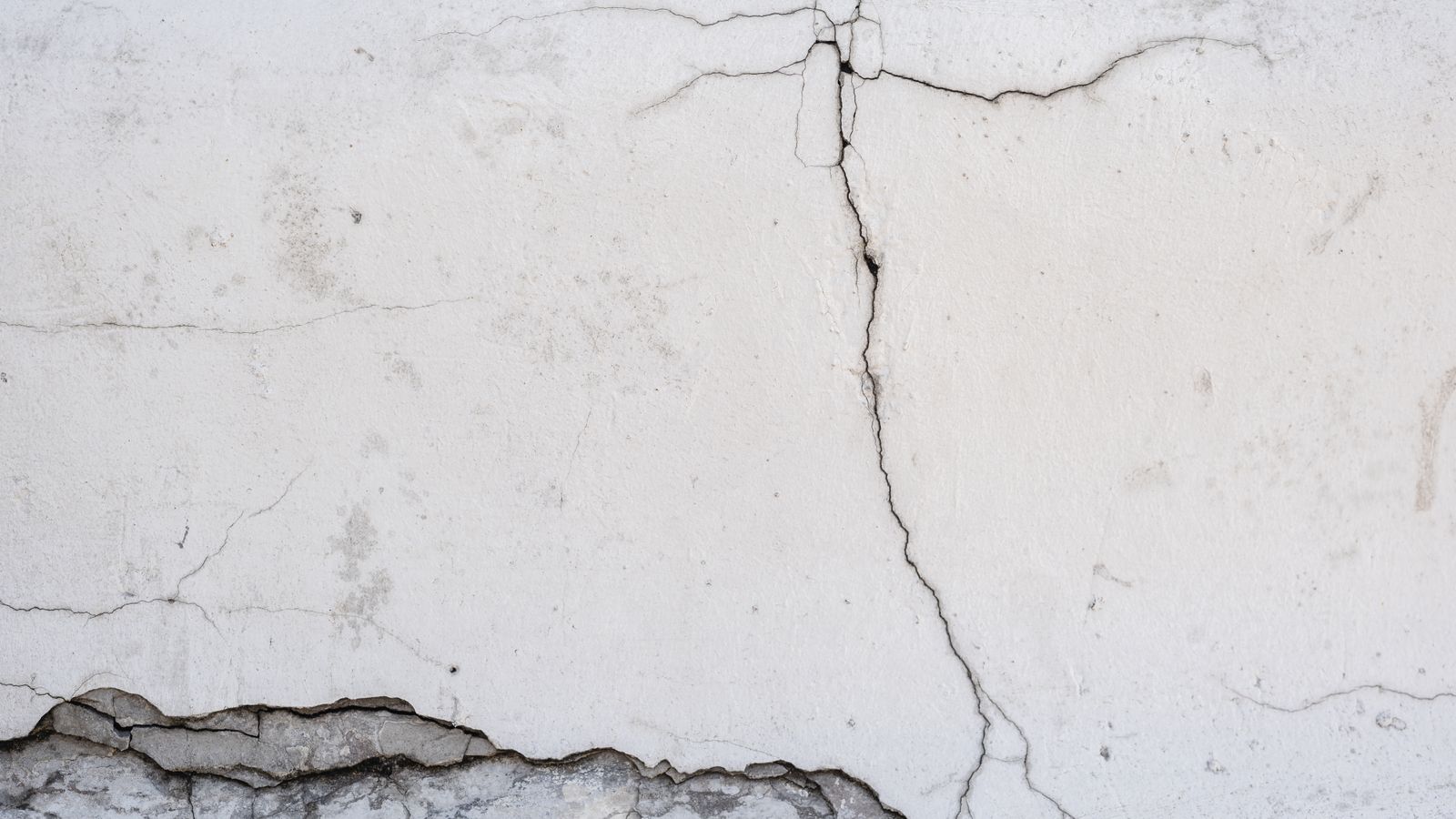
• Drywall cracks that keep getting wider, especially ones running at an angle up from the corners of doors and windows.
• Doors and windows that suddenly stick or won't latch when they always used to.
• Floors that slope or feel bouncy, or a gap opening between the floor and the baseboard.
• Stair-step cracks in exterior brick or block, following the mortar lines.
• Any crack wider than about a quarter inch, or one you can slip a coin into.
One of those on its own is usually minor and common — nearly every house has a few hairline cracks. It's several of them together, and getting worse over time, that points to real movement in the foundation or framing.
How to tell "getting worse" from "always been there"
The single most useful thing you can do is turn a vague worry into evidence by tracking a crack over time:
- Mark it. Draw a light pencil line across each end of a suspicious crack and write the date beside it.
- Measure it. Note the width against something you know — a credit card is about half a millimeter thick, a pencil about seven — so you have a reference you'll remember.
- Photograph it with something for scale, so you have a dated record to compare against.
- Check back in a month or two. If the crack has crept past your marks or clearly widened, you now have real evidence instead of a hunch.
When to call a pro — and which one
Widening cracks, sticking doors, and sloping floors together are a job for a structural engineer — not a general handyman, and not a foundation-repair company that makes its money selling you the repair. Pay for the independent diagnosis first; an engineer has no product to push, so you get an honest read on whether it's cosmetic or serious. It's the cheapest money you'll spend on the whole problem, and it keeps you from being upsold a five-figure fix for a crack that just needed watching.
Skip this
Caulking or spackling a moving crack over and over. Filler on a crack that's still growing just cracks again in a few months and hides the very evidence you need to judge whether it's getting worse. Track it first; patch it only once you're confident it has stopped moving. And don't panic over a single hairline crack or one noisy night — context and change over time are what matter, not any one pop in the dark.
Keep going
How to Patch Drywall So You Can't Tell It Was Ever Broken
Three thin coats and one trick beat one thick glob every time.
Why Your Breaker Keeps Tripping (And When to Stop Resetting It)
Three causes, one of which means you put the flashlight down and call an electrician.

The Real Reason Your Water Heater Runs Out of Hot So Fast
Usually it's sediment stealing your tank — and you can flush it in an afternoon.