
34 Uses for a Can of WD-40 That Go Way Past a Squeaky Hinge
It frees, cleans, and protects a dozen things around the house — and there are spots to never spray it.
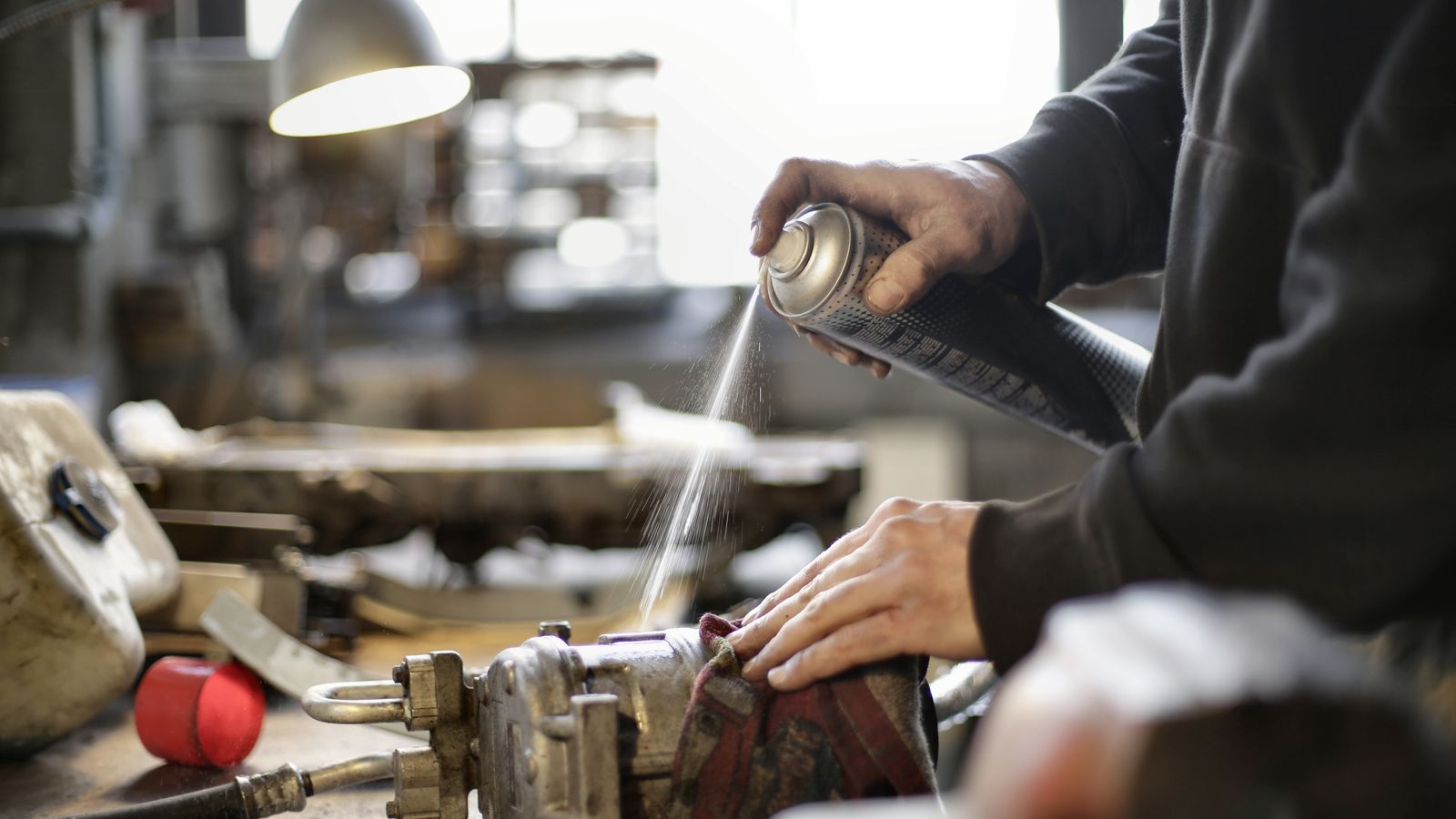
There's a can of it rattling around every garage in America, usually dragged out once a year for a squeaky door and then forgotten. WD-40 does a lot more than quiet a hinge — the makers famously claim thousands of uses — and, just as usefully, there are a few jobs it's flat wrong for, where reaching for it does more harm than good. The trick is understanding what the stuff actually is, because that one fact tells you every place it shines and every place it fails.
The key to using it well is knowing what it is: a penetrant and water-displacer, not a long-term lubricant. It's brilliant at getting something unstuck, clean, and dry — and the wrong choice for anything that needs lasting slickness. Once that clicks, the right and wrong uses sort themselves out.
What it's genuinely great at
Nearly everything WD-40 does well falls into four buckets:
- Freeing stuck and seized metal. This is its superpower: rusted bolts and nuts, seized hinges, a padlock shackle that won't turn, a stuck seat post, garden shears gummed shut with sap, a corroded trailer hitch. Spray it, walk away a few minutes to let it creep into the threads, then work the part loose.
- Removing gunk and residue. Sticker and label adhesive, price-tag goo, chewing gum, crayon and scuff marks on walls, tape residue, and tar or dead bugs off a bumper. It dissolves the sticky stuff so it wipes away.
- Displacing moisture. The "WD" literally stands for water displacement. Dry out a damp tool, a wet distributor cap or spark-plug boot, a squealing wet hinge, or a lock that got rained in — it pushes the water off the metal.
- Preventing rust. Wipe a thin film over bare hand tools, mower blades, garden tools, and outdoor hardware before they sit through a damp season; the coating keeps moisture off the bare metal.
Between those four jobs you can find dozens of specific household uses — which is where the "thousands of uses" reputation comes from.
Where NOT to spray it
Because it isn't a real lubricant, it lets you down — sometimes destructively — on:
• Bike chains: it strips the chain's real lube and attracts grit, so the chain wears faster. Use actual chain oil.
• Door locks: it gums up and collects dust inside the cylinder over time, eventually jamming it. Use dry graphite instead.
• Rubber, and some plastics: it can swell, soften, or degrade them — keep it off seals, gaskets, O-rings, and weatherstripping.
• Anything food-related — it's a petroleum product, not food-safe.
A dozen specific uses worth remembering
To make those four buckets concrete, here are jobs a can quietly handles around most homes:
- Freeing a stuck zipper on a jacket or bag (spray a rag, not the fabric near skin, then work the pull).
- Loosening a ring stuck on a finger — a classic use, though plain soap works too.
- Getting crayon, scuff marks, and sticker goo off walls, floors, and furniture.
- Quieting a squeaky hinge or a noisy garage-door track long enough to get proper lubricant on it.
- Cleaning dead bugs, tar, and tree sap off a car's paint and bumper.
- Freeing a rusted padlock, seized garden shears, or a bolt that won't budge.
- Drying out a rained-on lock or a wet tool so it works again and doesn't rust.
- Wiping a rust-preventing film on mower blades and hand tools before winter storage.
None of these are miracles — they're the same freeing, cleaning, displacing, and rust-proofing jobs showing up in everyday spots. Two myths are worth dropping while we're here: it is not a lasting fix for a hinge you want quiet for good (it works for a day, dries out, and the squeak returns — follow up with real oil), and it won't "restore" a tool that's already pitted with rust. It stops new rust and frees seized parts; metal that's already eaten away is eaten away.
The right way to use it
- Use the little straw for anything precise. It puts the spray on the one stuck bolt, not all over everything around it (and not on the belt or brake parts nearby).
- Give it time. On rusted, seized metal, spray it and wait several minutes — or spray twice, ten minutes apart — so it can creep into the threads before you muscle it. Patience frees bolts that brute force only rounds off.
- Follow up with the real thing. Once a part is free and clean, lubricate anything that keeps moving with the proper grease or oil for the job, because the WD-40 dries out and stops protecting fairly quickly.
One safety note: it's flammable. Don't spray it near an open flame, a pilot light, or a hot engine part, and let it dry before striking a spark anywhere near where you used it.
The honest summary
Think of WD-40 as the thing that gets a part moving, clean, and dry — then hand off to grease, chain oil, or graphite for anything that has to stay slick. Used that way, one can earns its spot on the shelf for decades.
Keep going
The 7 Tools Every House Needs (And 3 That Are a Waste of Money)
Buy these seven well, skip the gimmicks, and you'll handle 90% of home jobs.
Your AC Froze Into a Block of Ice — Here's the $0 Fix Before You Call Anyone
Nine times out of ten it's airflow, and you can clear it in about ten minutes.
You've Been Using Your Bathroom Fan Wrong This Whole Time
The 2-minute habit change that actually pulls the moisture out — and the mold trap most homes have.