
How to Jump a Car the Right Way (Most People Get Step 3 Backwards)
The last clamp does not go where you think — and it matters for safety.
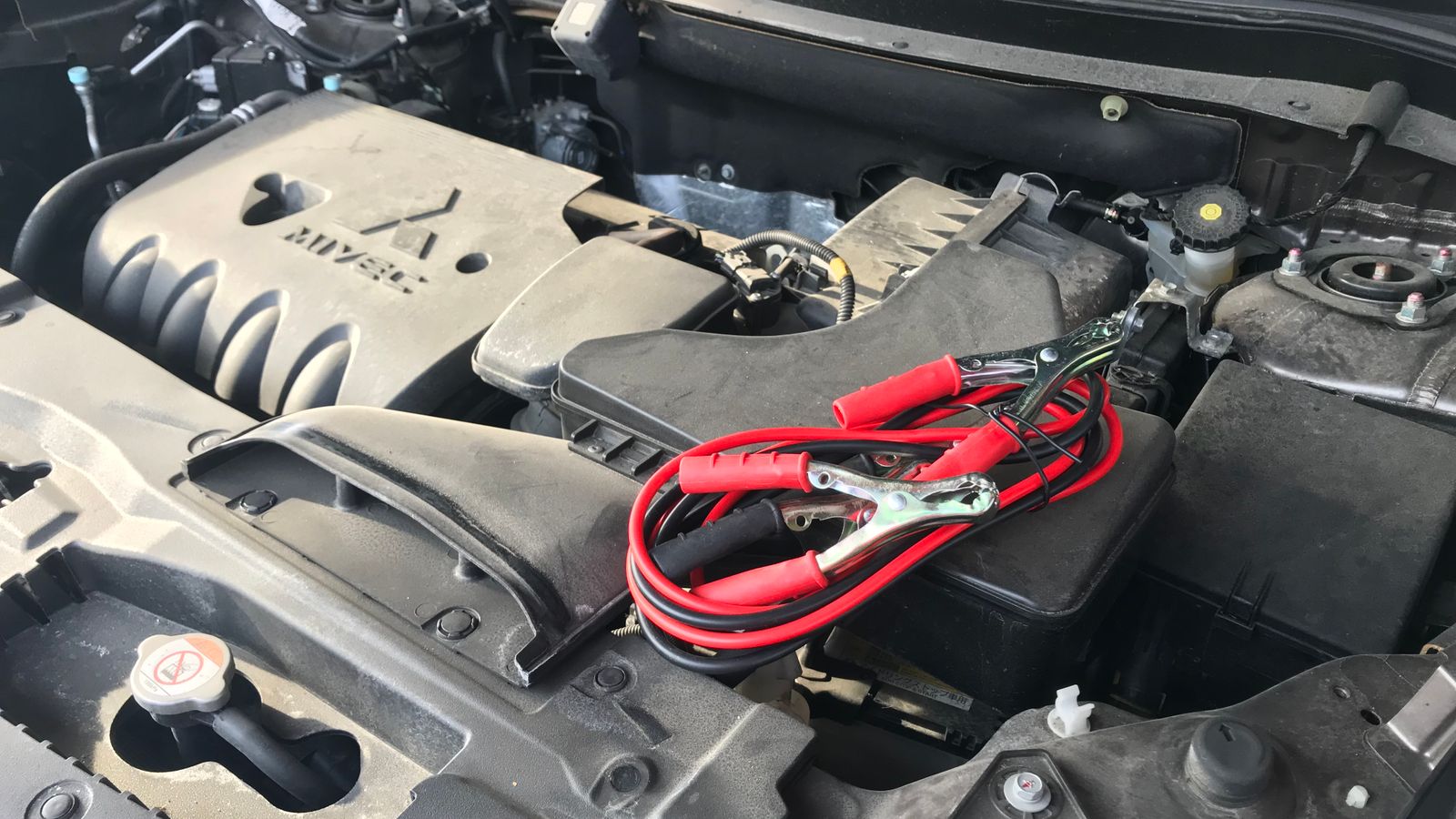
Dead battery in a parking lot, a kind stranger with a set of cables, and everybody standing around not totally sure which clamp goes where. Done in the right order it's a two-minute job. Done wrong — and the wrong step is one almost everyone fumbles — you can throw a spark in exactly the spot you don't want one, damage sensitive electronics, or connect it backwards and do real harm. Here's the sequence that keeps it safe and simple.
The order of the clamps isn't fussiness — it's safety. A charging battery gives off a little hydrogen gas, which is flammable, and the last connection you make is the one that can spark. The whole trick is making that final spark happen away from the battery, on bare metal.
Before you clamp anything
Two quick checks first. Park the good car close but not touching the dead one, both engines off and in park. Glance at the dead battery — if it's cracked, leaking, bulging, or frozen, don't jump it; that's a job for a tow, not cables. And note where each battery's positive (+) and negative (−) posts are before you start, so you're not fishing around with a live clamp.
The correct order
- Red clamp to the DEAD battery's positive (+) post.
- Other red clamp to the GOOD battery's positive (+).
- Black clamp to the GOOD battery's negative (−).
- Last black clamp to bare metal on the DEAD car — a clean, unpainted bolt or bracket on the engine block or frame — not the dead battery's negative post.
This is the step everyone gets wrong. Clamping that final cable to the dead battery's negative post puts a spark right next to the hydrogen gas it's venting. Grounding to distant bare metal instead makes the small spark happen safely away from the battery. That single detail is the entire reason for the order — don't shortcut it.
Then bring it back to life
- Start the good car and let it run a couple of minutes to push some charge across the cables.
- Start the dead car. If it cranks slowly or won't quite catch, give it another minute of charging and try again.
- Once it's running, remove the clamps in reverse order — last one on is first off — and don't let the clamps touch each other or any metal while the other end is still attached.
- Drive it 20–30 minutes (or put it on a charger) so the alternator can actually recharge the battery. A few minutes of idling won't do it.
A cheap portable jump box in your trunk skips the stranger and the cable-order dance entirely — you clamp it to your own battery (red to positive, black to a ground), press the button, and go. For anyone who parks somewhere quiet or drives an older car, it's fifty dollars of real peace of mind.
The mistakes that turn a jump dangerous
A few things separate a routine jump from a damaged car or a hurt hand:
- Never let the two cars touch, and never let the clamps touch each other once any of them are connected — you'd be completing a circuit you don't want, and a live clamp against metal or another clamp throws a real spark.
- Get the polarity right. Red is positive, black is negative, on both batteries. Reversing them sends current backwards and can fry the electronics in one or both cars in an instant — an expensive mistake from a two-second slip.
- Keep the cable ends clear of moving parts. Route them so a clamp or a loop of cable can't fall into the belts and fan when an engine starts.
- Don't jump a damaged battery. Cracked, leaking, bulging, or frozen — walk away and call a tow. Forcing current into a failed battery is how they rupture.
One more practical note: thin, cheap cables barely work. A big engine or a very dead battery needs heavy-gauge cables (a lower gauge number means thicker wire) at least 10 to 12 feet long. Skinny bargain cables can't carry enough current to crank a stubborn engine, which is why a jump sometimes "won't take" when the real problem is the cables, not the car.
Why it dies again the next morning
A successful jump proves the battery can take a start — it doesn't tell you why it was dead. If it fires with a jump but dies again overnight, the jump fixed the symptom, not the cause: the battery is worn out, the alternator isn't recharging it, or something is draining it while the car sits. Jumping it every morning slowly wears down both the battery and the starter, so get the charging system tested (most parts stores do it free) and fix the actual fault rather than living off the cables.
If it won't take a jump at all
No response after a solid, correct connection usually means a battery that's stone dead or a poor clamp bite — not something more cranking will cure. Recheck each clamp for a tight, clean grip on bare metal (a little corrosion blocks the whole circuit), give it a few minutes of charging before trying again, and make sure the good car is actually running. Still nothing? It's a fresh battery or a tow, not more attempts.
Keep going
Why Your Car Battery Won't Hold a Charge (Check This First)
Before you buy a battery, check the two cheap things that fake a dead one.
Your AC Froze Into a Block of Ice — Here's the $0 Fix Before You Call Anyone
Nine times out of ten it's airflow, and you can clear it in about ten minutes.

You've Been Using Your Bathroom Fan Wrong This Whole Time
The 2-minute habit change that actually pulls the moisture out — and the mold trap most homes have.